
Louisiana Council’s Advocacy Network
LaCAN (Louisiana Council’s Advocacy Network) furthers the Council’s mission by advocating for policies and systems that support inclusion everywhere people learn, work, live, and play. LaCAN advocates for service systems that support children and adults with disabilities to live in their own homes and be fully-included and participating members of their local schools and communities.
LaCAN provides information and support to individuals wishing to effectively advocate for systems change in the areas of home and community-based services, education, and employment. Regional LaCAN teams include individuals with disabilities, their family members, and professionals. These members are notified by email or phone when communication with state agency officials, legislators or the Governor is necessary.




A Legacy of Advocacy for Louisiana’s Citizens with Disabilities
In Louisiana, as in other states, services were traditionally provided in institutions or other congregate settings, while services available to people in their own homes in the community were basically non-existent. That began to change in 1988 when the Council created LaCAN to advocate for the Community and Family Support Movement which led to the passage of Act 378 in 1989 (Community and Family Support System). As a result of Act 378, Louisiana’s state-funded individual and family support programs and Medicaid home and community-based waivers are some of the best in the nation, affording people with even the most significant disabilities the opportunity to live in their own homes or with their families. The state’s four waivers for people with developmental disabilities serve thousands of people with no one with current needs waiting for services.
What We Do
LaCAN members participate in various advocacy activities throughout the year. Their efforts have resulted in major accomplishments that have improved the lives of individuals with disabilities. There are plenty of opportunities to get involved. Your level of activity is totally up to you.
-
Regional Membership Meetings
-
Legislative Roundtables
Roundtables are held each February – March in every region of the state. Roundtables give you the chance to:
- Learn how to share your story to make a difference
- Meet with legislators in your area
- Get up-to-date information on state issues
- Build your advocacy skills
- 2026 Roundtable Schedule
-
Legislative Visits
Legislators are elected to represent us. Legislators usually want to know what people think and what their concerns are. One of the best ways to show them why change is needed is by sharing personal stories. LaCAN Leaders support their regional members by giving them ideas about:
- What to say when they meet with legislators (talking points), and
- How to tell their personal story.
Leaders set up meetings with legislators throughout the year. Please contact your Leader when you are interested in joining a meeting.
-
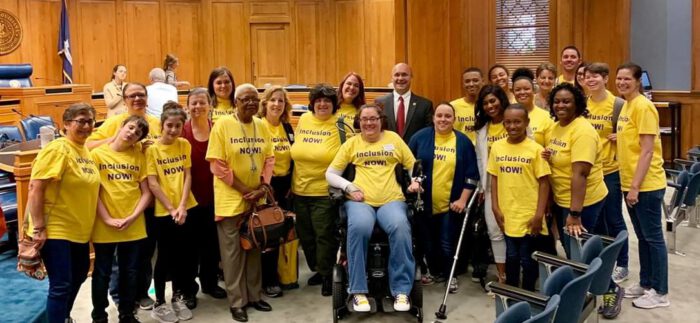
Yellow Shirt Days
Yellow Shirt Days are organized by LaCAN to advocate for people with developmental disabilities. Participants wear yellow shirts to show support for disability services and education issues.
- LaCAN members attend legislative committee meetings when important decisions are being made. They share how bills may affect people with developmental disabilities and their families. This is important because every bill must pass through committee before it can become law.
- LaCAN members attend meetings at the Board of Elementary and Secondary Education (BESE), Special Education Advisory Panel (SEAP), and other important education meetings.
- LaCAN members also share their stories when public testimony is allowed.
Leaders work with members in their region to make sure there is a good LaCAN presence at these meetings.
-
Information & Action Alerts
Action Alerts let LaCAN members know about possible changes to policies that could affect people with developmental disabilities and the services they get. Action Alerts also explain what members can do to speak up about these changes. Most alerts are sent during the legislative session, but they can happen anytime if an important issue comes up.
Taking action usually means sending an email or letter to legislators or other decision-makers. It only takes a few minutes, but it helps legislators understand how their decisions affect people with developmental disabilities and their families.
If you need help understanding an alert or taking action, LaCAN Leaders are there to help.
-
Guiding Principles
- All children, no matter how severe their disability, need loving families where they are supported to develop and use all of their abilities.
- Adults with developmental disabilities should:
- Make their own decisions, with support when needed.
- Live in typical homes and communities, and
- Have the same rights and responsibilities as everyone else.
- All people with developmental disabilities should have opportunities to work in the community with everyone else. They should get the support they need to find and keep jobs. This includes people with the most severe disabilities.
- All students, with or without disabilities, should have the same opportunities to be educated in neighborhood schools with their sisters, brothers, friends, and neighbors. They should get the support they need to make this happen.
Benefits to Membership
You can make a difference for people with developmental disabilities by joining LaCAN and supporting its advocacy work! There is no cost to join. And you can choose how much you want to participate. Here are some benefits of joining LaCAN:
- CONNECTION – become a part of a regional team of advocates making a difference
- INFORMATION – get information on proposed policy changes and how those changes might affect you and others
- TRAINING – learn skills to effectively advocate for systems change
- SUPPORT – get help from a regional LaCAN Leader who will connect you with your policymakers and support your advocacy activities.
Connecting lawmakers, individuals with disabilities, and family members to make positive change in support and services for people with disabilities.